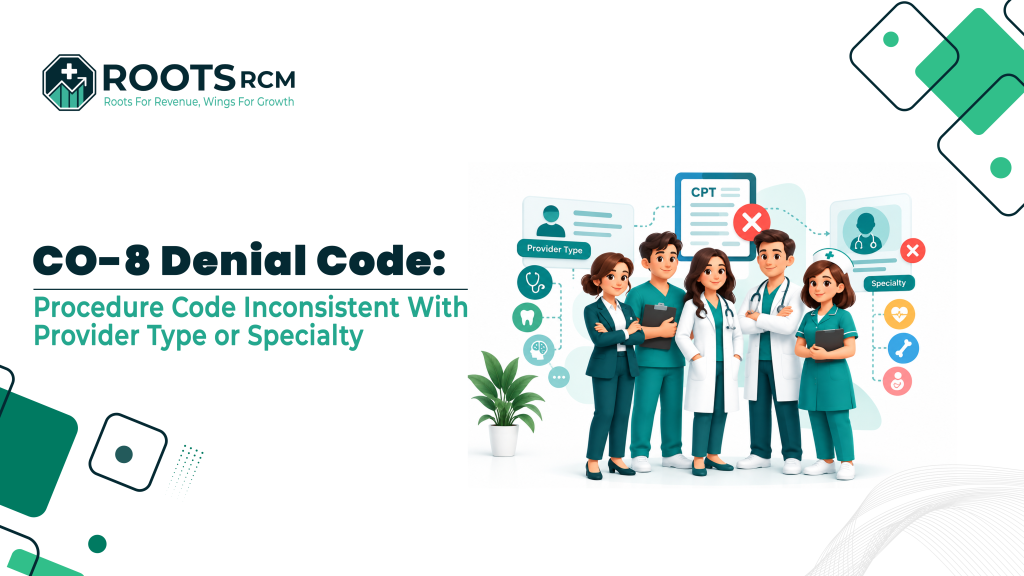
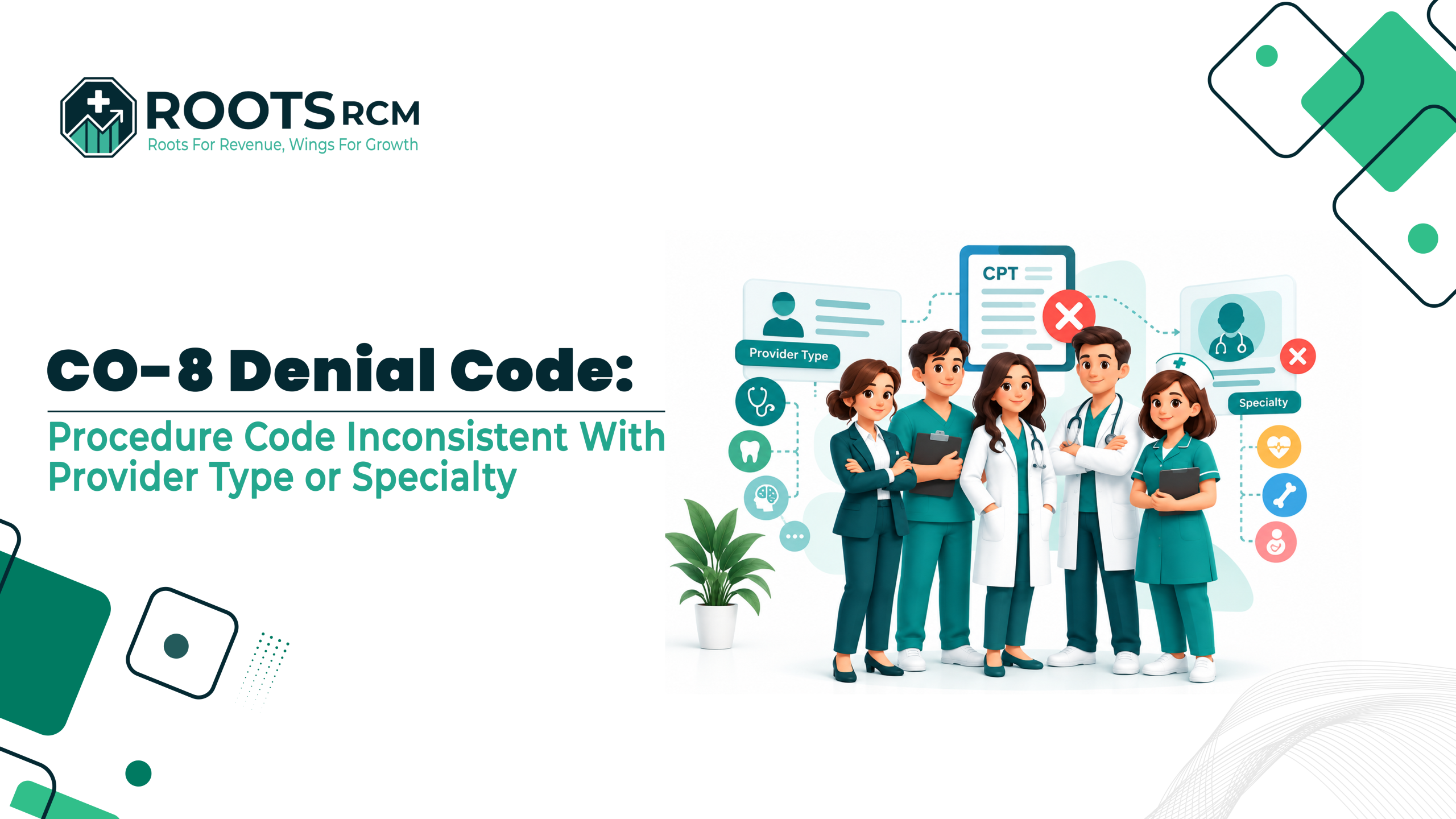
CARC 8 means the payer determined that the procedure code is inconsistent with the provider type or specialty (taxonomy) reported on the claim.
In simple terms, the payer is saying:
“The service billed does not match the provider type or specialty we have on record.”
This does not necessarily mean the CPT/HCPCS code itself is wrong. The problem may be the relationship between the procedure and the provider’s enrollment or specialty information.
CO 8 Denial can occur when the provider is enrolled with the payer under a specialty that does not support the procedure being billed.
It may also happen when the provider’s taxonomy code is incorrect, outdated, missing, or not properly associated with the payer’s provider record.
Another situation is when a provider adds a new specialty or service but the payer’s enrollment information has not been updated.
The claim can also be submitted with the wrong rendering provider, especially in practices with multiple providers and specialties.
A provider is enrolled with an insurance payer under Specialty A. The practice submits a procedure that the payer’s system does not consider appropriate for that provider specialty.
The procedure may be correctly coded and medically appropriate, but the payer’s system identifies a mismatch between the procedure and provider specialty.
The claim is then adjusted with CO 8 Denial.
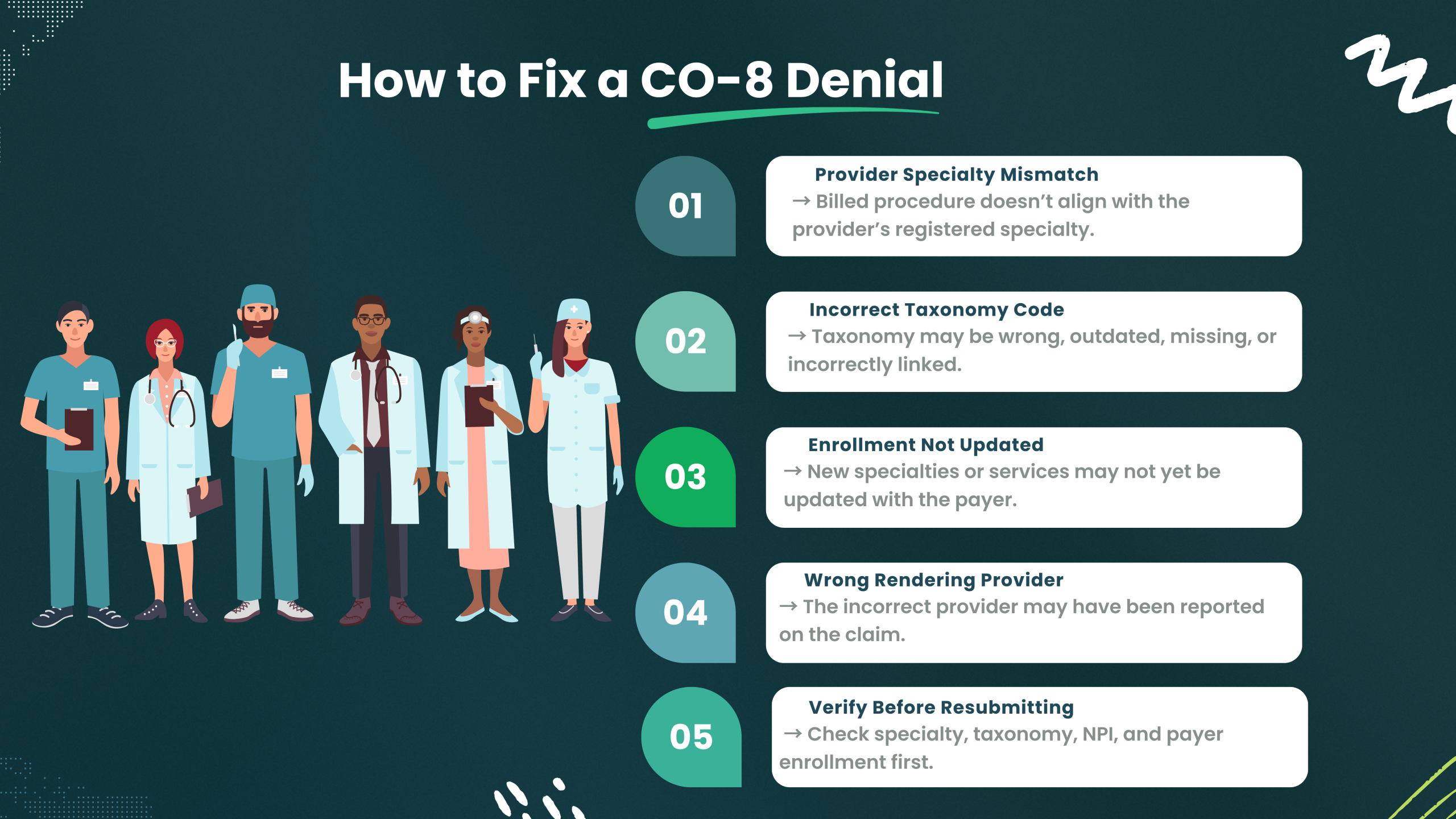
Start by checking the rendering provider’s specialty and taxonomy in the payer’s records.
Then compare that information with the provider’s current enrollment information, NPI records, CAQH profile, and practice records.
Also verify that the correct rendering provider was placed on the claim.
If the payer’s information is outdated or incorrect, request the appropriate provider demographic, specialty, or enrollment update.
If the provider is not actually enrolled to provide the service under that payer, simply resubmitting the claim will not solve the problem. The underlying enrollment issue must be addressed first.
This is an important distinction.
CO 8: The procedure is inconsistent with the provider’s type or specialty.
CO 12: The diagnosis is inconsistent with the provider’s type or specialty.
So,
CO 8 = Procedure
Provider specialty
CO 12 = Diagnosis
Provider type
CO 8 Denial is also different from CO 170, which concerns a service being denied because it was performed or billed by a particular provider type. CO 8 focuses specifically on the procedure to provider specialty/taxonomy relationship.
CO 8 Denial demonstrates why billing and credentialing information must remain connected.
A provider can be credentialed with a payer, yet a claim can still fail if the payer’s provider record, specialty, taxonomy, or claim configuration does not support the service being billed.
Therefore, when a provider changes specialty, adds services, changes group affiliation, or updates enrollment information, the billing team should verify that the payer’s records support the services that will be submitted.
Keep provider enrollment and billing records synchronized.
Before billing a new service, verify that the provider is appropriately enrolled and that the payer recognizes the provider’s specialty/taxonomy for that service.
For practices with multiple providers, also maintain accurate ‘provider to specialty’ and ‘provider to service’ configuration in the PMS/EMR.
CO 8 Denial means the payer sees a mismatch between the billed procedure and the provider’s type or specialty/taxonomy.
The solution is not automatically to change the CPT code. First determine whether the problem is with the procedure, rendering provider, taxonomy, payer enrollment, or claim configuration.
Disclaimer: All examples and information in this article are fictional/generalized for educational purposes and do not relate to any real patient or any patient's medical, insurance, or billing information.

No. The procedure code may be correct. The problem can be the provider's specialty, taxonomy, enrollment, or claim configuration.
Yes. Incorrect or outdated specialty or taxonomy information in the payer's enrollment record can contribute to this denial.
No. CO-8 concerns the procedure, while CO-12 concerns the diagnosis.
No. CO 8 Denial specifically addresses the relationship between the procedure and provider specialty/type. CO 170 is a broader denial involving the provider type under which the service was performed or billed.
Not before identifying and correcting the underlying issue. Repeatedly submitting the same claim without correcting the provider or enrollment problem usually will not resolve the denial.