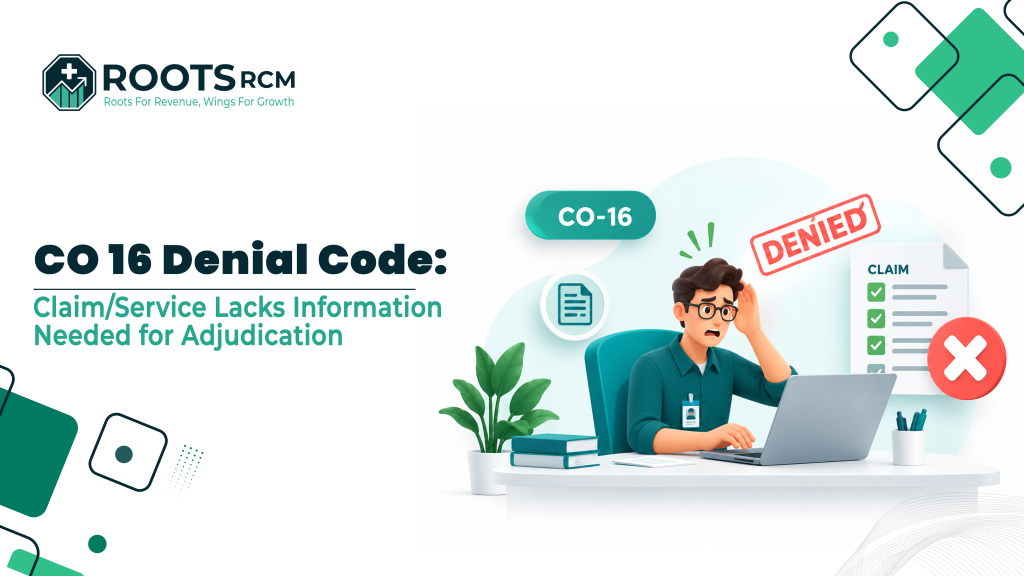
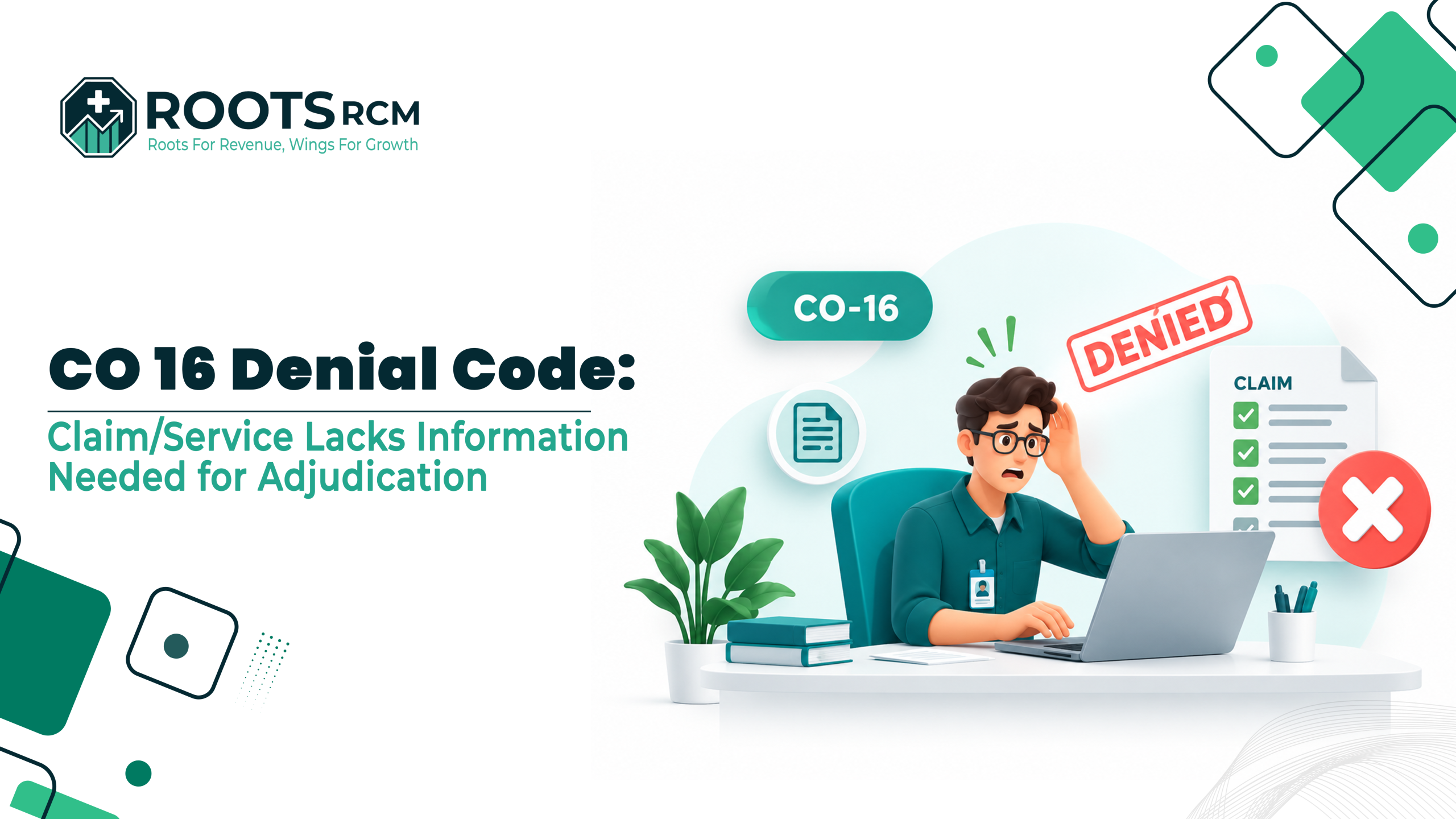
CARC 16 means the payer determined that the claim is missing information, or contains submitted information that does not support the need for the service, and cannot be processed as submitted.
In simple terms, the payer is saying:
“We can’t adjudicate this claim as is. Something required is missing or incomplete.”
This does not mean the service was medically unnecessary or incorrectly coded. It means the claim itself is incomplete from a data or documentation standpoint.
CO 16 can occur when a required field on the claim is missing, such as a modifier, referring provider, NPI, date of onset, or diagnosis pointer.
It may also happen when the claim is missing supporting documentation the payer requires, such as medical records, an operative report, or an itemized statement.
Another situation is when the claim is missing an associated remark code (like an N code or M code) that would normally accompany CO 16 to clarify exactly what’s missing.
The claim can also be flagged this way when patient demographic or insurance information on file does not match what’s submitted, such as a mismatched subscriber ID or date of birth.
A provider submits a claim for a service that requires a specific modifier to indicate it was distinct from another procedure performed the same day.
The claim is submitted without that modifier.
The payer’s system cannot determine how to adjudicate the claim without it and returns the claim with CO 16.
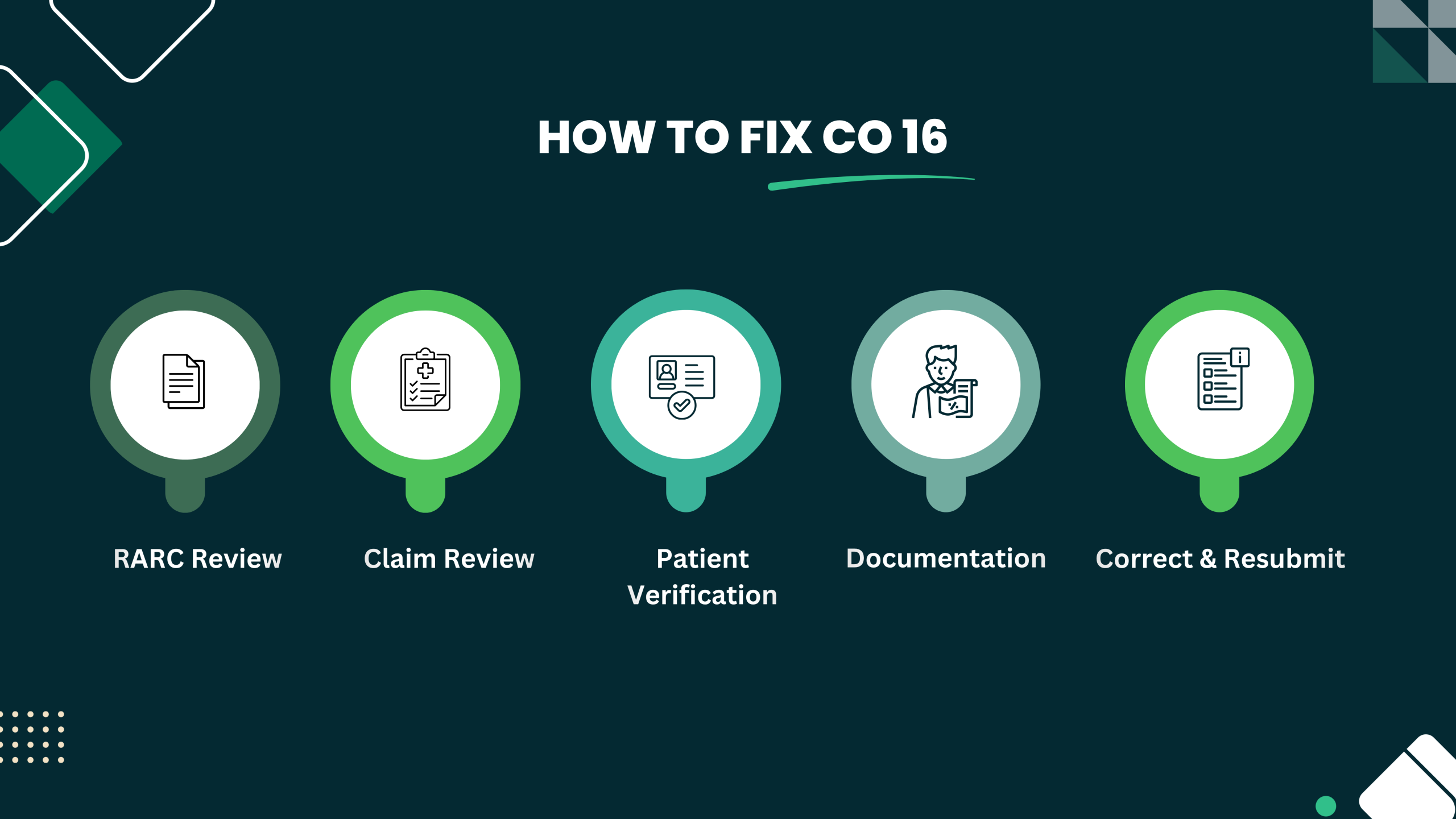
Start by checking the remittance advice for any accompanying remark codes. CO-16 is almost always paired with an RARC (remark code) that specifies exactly what information is missing.
Then pull the claim and compare it against the payer’s requirements for that procedure or service type, checking modifiers, diagnosis pointers, provider identifiers, and dates.
Also verify that patient and subscriber information matches what the payer has on file.
If documentation was required, gather and submit the requested records along with a corrected claim.
If the missing item was a coding or data entry element, correct it and resubmit rather than appealing, since this is a data completeness issue, not a coverage dispute.
This is an important distinction.
CO 16: The claim is missing information required for adjudication.
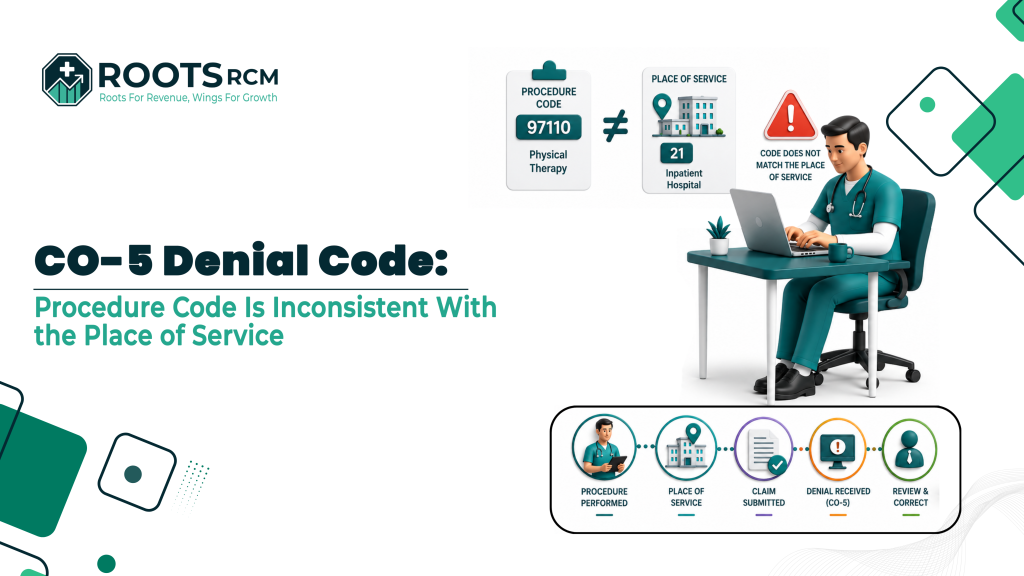
CO 4: The procedure code is inconsistent with the modifier used, or a required modifier is missing.
So,
CO 16 = Missing/incomplete information (broad)
CO 4 = Modifier-specific mismatch
CO 16 is also different from CO 252, which specifically means additional documentation is needed before the claim can be adjudicated. CO 16 is the general “incomplete claim” code, often paired with a remark code that narrows down the exact issue, and CO 252 is one common reason it’s used.
CO 16 demonstrates why the remark code attached to a denial matters as much as the denial code itself.
A CO 16 alone tells you something is missing, but not what. Without reading the accompanying remark code, the billing team is guessing at the fix.
Therefore, staff should be trained to always read CARC and RARC codes together, never CARC alone, when working denials.
Use claim scrubbing tools that flag missing modifiers, provider identifiers, and required fields before submission.
Before billing, confirm that patient and subscriber demographic information matches payer records exactly.
For services that commonly require documentation, such as certain DME, injections, or unlisted codes, attach records proactively instead of waiting for a denial.
CO 16 means the claim could not be adjudicated because required information was missing or incomplete, and the specific gap is almost always identified by an accompanying remark code.
The solution is not to resubmit the same claim unchanged. First identify the exact missing element via the remark code, correct it, and then resubmit.
Disclaimer: All examples and information in this article are fictional/generalized for educational purposes and do not relate to any real patient or any patient's medical, insurance, or billing information.

No. It can involve missing modifiers, provider identifiers, demographic mismatches, or documentation, depending on the accompanying remark code.
It's uncommon and makes troubleshooting harder. Whenever possible, payers pair CO 16 with an RARC to specify the missing item.
No. CO 4 is specific to modifier inconsistencies, while CO 16 is a broader "incomplete claim" designation.
Generally no. Correct the missing or incomplete information and resubmit the corrected claim instead of filing a formal appeal.
Yes. Front end edits that catch missing modifiers, identifiers, or required fields before submission significantly reduce CO 16 denials.