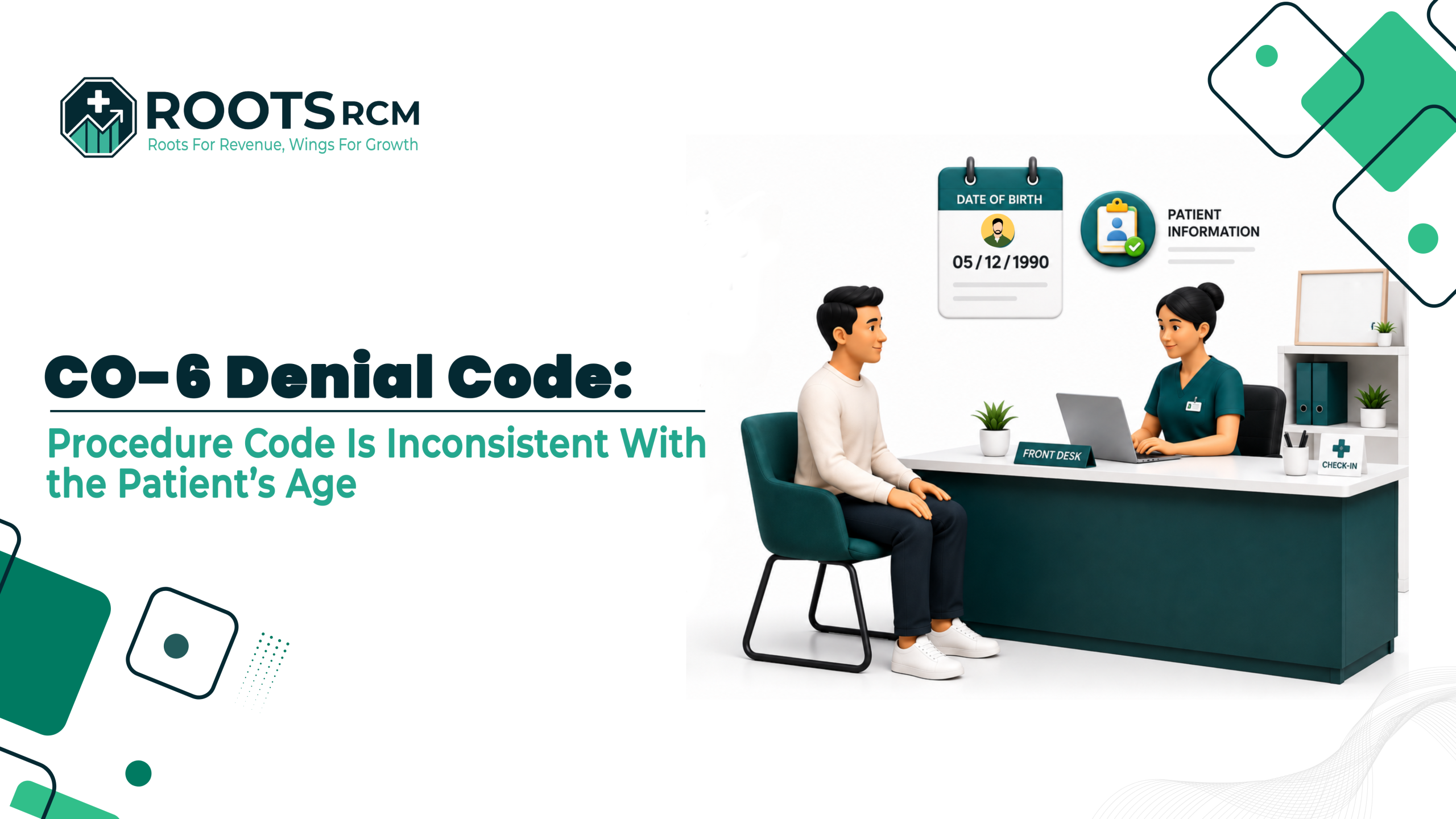
CO-6 Denial means the procedure code is inconsistent with the patient’s age.
In simple terms, the payer believes that the procedure reported on the claim does not match the patient’s age.
A CO-6 Denial does not necessarily mean that the procedure was medically inappropriate. The problem may be caused by incorrect patient information, incorrect procedure coding, or a payer edit that does not agree with the combination of the patient’s age and the procedure reported.
X12 defines CARC 6 as “The procedure code is inconsistent with the patient’s age.”
One common cause of a CO-6 is an incorrect date of birth on the claim.
For example, if a patient’s date of birth was entered incorrectly, the payer may calculate the patient’s age incorrectly. A procedure that is appropriate for the patient’s actual age may then appear inconsistent with the age shown on the claim, triggering a CO-6 Denial.
A CO-6 Denial can also happen when the wrong procedure code is selected. Some procedures are designed for specific age groups or have coding rules that depend on the patient’s age. If the wrong code is reported, the payer’s system may identify the claim as inconsistent and issue a CO-6 Denial.
Another possibility is that the provider’s coding is correct, but the payer has a specific age related coverage or coding rule that needs to be reviewed before the CO-6 Denial can be resolved.
Imagine a child receives a service and the provider submits a procedure code that the payer’s system considers appropriate only for a different age group. The patient’s insurance information is active, and the procedure was actually performed.
However, the payer’s claim edits compare the procedure code with the patient’s age and determine that the combination is inconsistent.
The claim may then receive CO-6. The important point is that the denial does not automatically mean the service was never covered. The billing team needs to determine why the payer’s system found the age and procedure inconsistent.

Start by checking the patient’s date of birth in the billing system and comparing it with the information on the claim. If the DOB is incorrect, correct the patient record and follow the payer’s requirements for submitting a corrected claim.
If the DOB is correct, review the procedure code that was submitted. Make sure the code accurately represents the service documented in the medical record and that it is appropriate for the patient’s age.
If both the DOB and procedure code are correct, review the payer’s policy and any accompanying remark code. The payer may provide additional information explaining the age-related edit.
The key is to correct the actual problem rather than simply changing the procedure code to avoid the denial.
When a CO-6 Denial appears, review the claim in this order:
Patient DOB → Patient age → Procedure code → Medical documentation → Payer requirements
This simple review can quickly separate a patient information error from a coding issue and identify the true cause of the CO-6.
Age can be an important part of correct procedure coding. A provider may perform a similar type of service for patients of different ages, but the appropriate procedure code may differ depending on the patient’s age and the circumstances of the service. Getting this wrong is one of the most avoidable causes of a CO-6 Denial.
For this reason, coders should select the code that accurately describes the service based on the current coding rules and the provider’s documentation.
The goal should never be to select a code simply because it produces payment. The code must accurately represent the service that was performed. Taking shortcuts in this area is what turns a single CO-6 Denial into a recurring pattern.
Accurate patient registration is the first line of defense against a CO-6 Denial. The patient’s date of birth should be entered correctly and checked when necessary. This is particularly important for pediatric practices and other specialties where age can directly affect procedure coding.
The coding team should also review procedures that have age related coding rules. A claim scrubbing system can help identify certain age and procedure inconsistencies before the claim is submitted, reducing CO-6 Denial risk significantly. However, the billing team should still review unusual cases rather than relying entirely on automated edits.
Building a habit of verifying patient demographics at every visit is one of the most effective long term strategies for preventing a CO-6 Denial before it reaches the payer.
The appropriate action always depends on the actual reason behind the CO-6.
A CO-6 Denial means the payer believes the procedure code is inconsistent with the patient’s age. The cause may be as simple as an incorrect date of birth, but it can also involve incorrect procedure coding or a payer specific age edit.
The best way to resolve a CO-6 is to verify the patient’s age first, then review the procedure code and supporting documentation.
Do not change the procedure code simply to make the claim pass the payer’s age edit. Correct coding must always reflect the service actually provided. And if CO-6 Denial keeps appearing in your denial reports, it is time to look at both your registration process and your coding workflow to find where the breakdown is happening.
Disclaimer: This article is provided for general educational and informational purposes only. The examples and information used are fictional or generalized and do not relate to any real patient or patient's medical, insurance, or billing information. Payer policies, requirements, and denial code usage may vary and can change over time. Always verify current payer guidelines and applicable official requirements before taking action on a claim.

CO-6 means the procedure code is inconsistent with the patient's age.
An incorrect date of birth, incorrect procedure code, or a payer specific age related coding or coverage rule can cause a CO-6.
Verify the patient's DOB, review the procedure code and documentation, check the payer's requirements, correct the actual error, and resubmit or appeal as appropriate
A CO-6 is primarily an age and procedure coding consistency issue, although incorrect patient demographic information can also cause it.
Yes. Accurate patient demographics, careful coding, and pre-submission claim review can prevent many CO-6 Denials.
No. The procedure code should only be changed when the original coding was incorrect and the corrected code is supported by the medical record and applicable coding rules. Never change coding simply to avoid a CO-6.