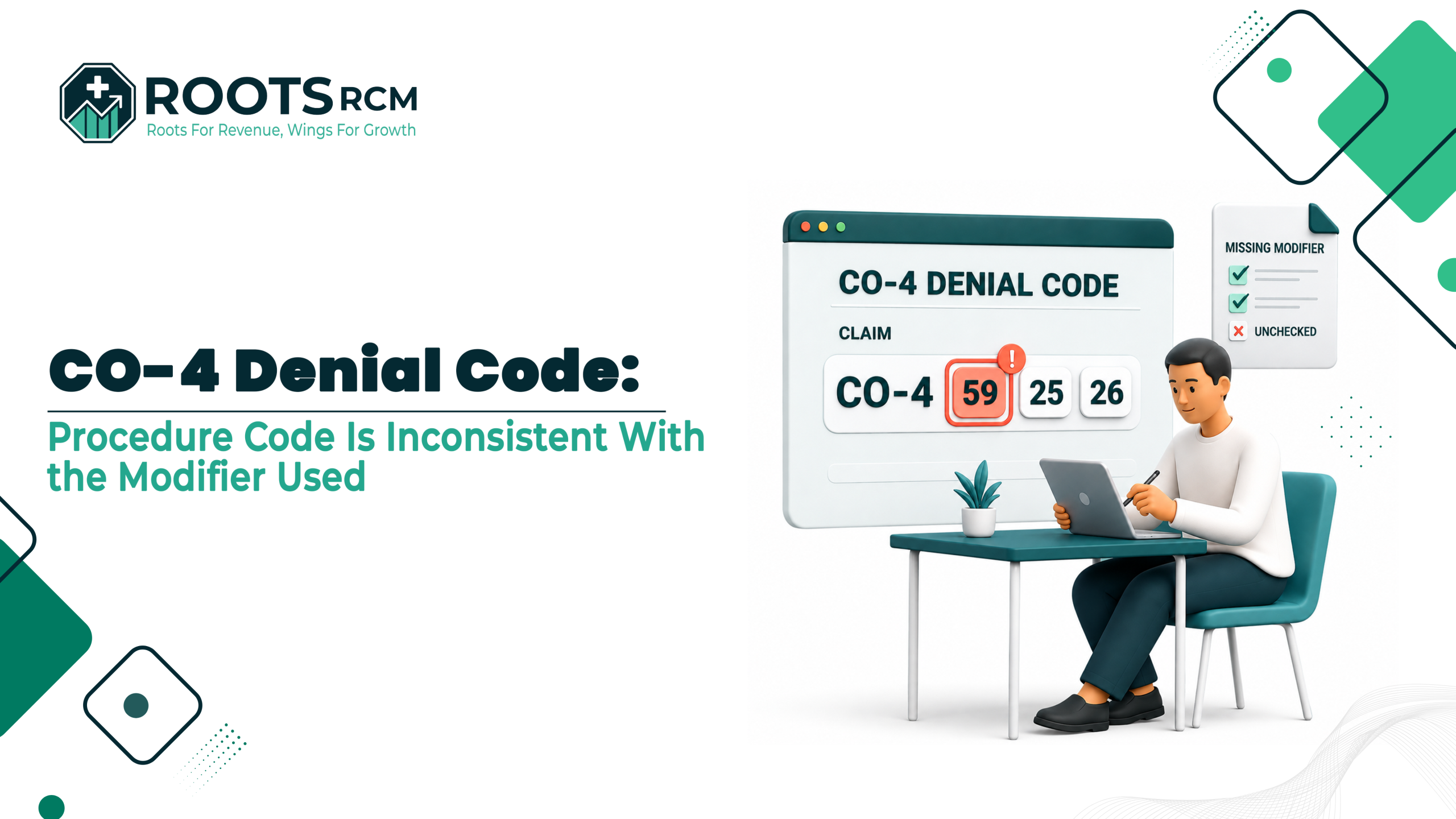
CO-4 Denial means the procedure code is inconsistent with the modifier used.
In simple terms, the payer believes that the CPT or HCPCS procedure code and the modifier reported with it do not work together correctly.
A modifier is a 2 character code added to a procedure code when additional information is needed about how, where, or under what circumstances the service was performed.
For example, modifiers can indicate that a service was performed on one side of the body, that a procedure was separate from another service, or that a service was provided by a particular type of provider.
When the modifier does not correctly apply to the procedure code, the payer may return the claim with a CO-4 Denial. X12 defines CARC 4 as: “The procedure code is inconsistent with the modifier used.”
A CO-4 Denial usually happens because the modifier and procedure code do not match.
Sometimes the wrong modifier is selected during coding. In other cases, the modifier may be correct in general but not appropriate for that particular CPT or HCPCS code.
For example, a coder may add a modifier because the service was performed on the right or left side of the body. But if the procedure code does not require or accept that type of modifier, the payer may reject or deny the claim with a CO-4 Denial.
Another common situation leading to a CO-4 Denial is using a modifier that does not accurately describe what happened during the encounter.
This is why modifiers should not be added simply because they might help a claim get paid. The modifier must be supported by the actual service, documentation, coding rules, and payer requirements.
Suppose a provider performs a procedure on the patient’s right side.
The coder selects the appropriate procedure code but adds a modifier that is not valid for that particular procedure.
The payer receives “CPT code + incorrect modifier.”
The procedure itself may be covered, and the provider may have performed it correctly. However, the combination submitted on the claim does not meet the payer’s coding rules. The payer may then return a CO-4 Denial.
The problem is not necessarily the procedure. The problem is the relationship between the procedure code and modifier, which is the core reason behind every CO-4 Denial.
Start by reviewing the denied claim and identifying the exact CPT or HCPCS code that received the CO-4 Denial.
Then review the modifier that was submitted with that code.
The next step is to compare the code and modifier with the current coding guidance and the payer’s requirements. Also review the medical record to make sure the circumstances described by the modifier actually occurred.
If the modifier was incorrect, remove or replace it as supported by the documentation and applicable coding rules. Then submit the corrected claim according to the payer’s requirements.
If the modifier was correct, the billing team should investigate whether the payer has a specific rule affecting that code and modifier combination that triggered the CO-4 Denial.
Do not change a modifier simply because the claim was denied. The corrected claim must accurately represent the service that was performed.
When a CO-4 Denial appears, the review should be straightforward:
Procedure code → Modifier → Documentation → Coding rules → Payer requirements
First, confirm that the CPT or HCPCS code is correct. Then check whether the modifier is appropriate for that code. Next, confirm that the medical record supports the circumstances represented by the modifier. Finally, check the payer’s billing requirements before resubmitting the claim.
This helps the billing team correct the actual problem behind the CO-4 Denial instead of repeatedly sending the same claim back to the payer.
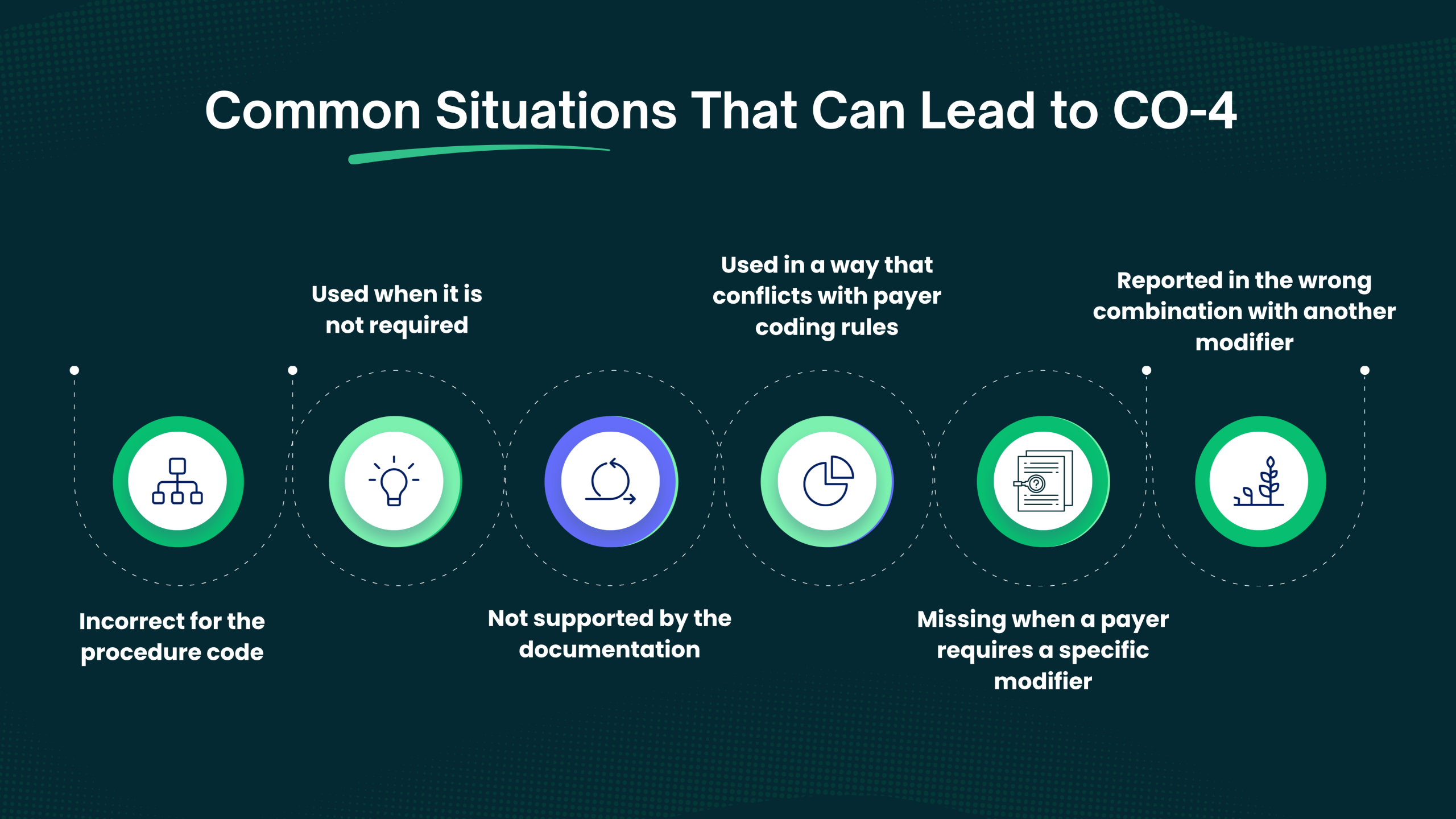
A CO-4 Denial may occur when a modifier is:
The exact reason for the CO-4 Denial should always be confirmed from the claim details and payer response. A RARC (Remittance Advice Remark Code) may provide additional information when it is reported with the CARC. CMS explains that CARCs provide the general reason for a payment adjustment, while RARCs can provide more specific information.
The best way to prevent a CO-4 Denial is to make sure modifiers are reviewed before the claim is submitted.
Coders should not select modifiers based only on habit or previous claims. They should consider the actual service performed and the documentation supporting it. A good claim scrubbing process can also check whether commonly used procedure and modifier combinations are valid before the claim reaches the payer, reducing CO-4 Denial risk significantly.
It is also important to keep coding processes updated. Payer rules and standard code sets can change, and CMS implements CARC and RARC updates throughout the year. The July 2026 Medicare update was implemented on July 6, 2026.
In most cases, the first question when handling a CO-4 Denial is whether the modifier was actually wrong. If the modifier was entered incorrectly, a corrected claim may be appropriate.
If the modifier was correct and supported by the documentation, but the payer incorrectly applied a CO-4 Denial, the provider may need to follow the payer’s dispute or appeal process. The decision should be based on the actual claim and payer instructions.
A CO-4 Denial means the procedure code and modifier reported on the claim are inconsistent.
The procedure itself may be correct. The problem may simply be the modifier attached to it. The best way to resolve a CO-4 Denial is to review the procedure code, modifier, medical documentation, coding requirements, and payer rules together.
And the most important rule is simple: never add, remove, or change a modifier just to make a claim pay. The modifier must accurately describe the service that was performed and be supported by the documentation. That is the only sustainable way to prevent a CO-4 Denial from recurring.
Disclaimer: This article is provided for general educational and informational purposes only. The examples and information used are fictional or generalized and do not relate to any real patient or patient's medical, insurance, or billing information. Payer policies, requirements, and denial code usage may vary and can change over time. Always verify current payer guidelines and applicable official requirements before taking action on a claim.

CO-4 Denial means the procedure code is inconsistent with the modifier used on the claim.
A CO-4 Denial can happen when the wrong modifier is used, the modifier is not appropriate for the procedure code, or the documentation does not support the modifier.
Review the procedure code and modifier, check the documentation and applicable coding and payer rules, correct the claim if necessary, and resubmit it according to the payer's requirements.
It is primarily a procedure code and modifier consistency issue, so coding should be carefully reviewed when a CO-4 Denial appears.
Yes. Accurate coding, proper documentation, current payer guidelines, and claim scrubbing edits can help prevent a CO-4 Denial.
No. A modifier should only be changed when the original modifier was incorrect and the corrected coding is supported by the medical record and applicable requirements.