Dental claims are one of the most detail sensitive billing processes in healthcare. Unlike medical billing, dental claims are denied not just for medical necessity issues but for something as simple as a missing tooth number or a blank surface field. With payers becoming increasingly strict in 2026, submitting clean dental claims on the first try is no longer optional. It is the difference between a healthy revenue cycle and a backlog of denials eating into your collections.
This checklist covers the 12 most critical checkpoints every dental billing team must follow to hit a 98% first-pass acceptance rate on dental claims.
"Golden Rule in Dental: Payers deny dental claims by default for missing tooth info, not medical necessity. One blank tooth field = automatic denial."
Child patient, subscriber is mom, but DOB used is child’s DOB for subscriber ID. Or using medical insurance ID instead of dental insurance ID.
Pro Tip: For dependents over 18, many plans require full time student verification. Flag age 19 to 26.

Patient had SRP 2 years ago, you bill again but payer allows once per 24 to 36 months. Or crown frequency is 5 to 7 years per tooth.
Call or portal check must include:
Script: “For D1110, D0120, D0274, when was last paid? For D4341/D4910, history? For crowns per tooth?”
Verifying eligibility before submitting dental claims saves significant rework down the line.
Every CDT code that requires it has it. Tooth # 1-32, Primary A-T, Surfaces M O D B L I, Quadrants UR UL LR LL, Arch U L
D2392 (Resin 2 surfaces) billed without “MO” or tooth number. D7140 billed without tooth number. D4341 billed without quadrants.
Never submit:
Rule: D2740 Crown needs tooth number. D2750 same. D5110 Denture needs Arch U/L. D4341 needs 4 quads + all teeth in quad listed.
Missing tooth and surface information is the number one reason dental claims get auto-denied before review.
2026 Update: D4341/D4342 require full perio charting. No chart = no pay on dental claims.
Dental is procedure driven, but medical necessity still matters for Implants, SRP, Surgical extractions, Frenectomy, TMJ
Billing D6010 implant with no narrative. Payer denies: “Not medically necessary.”
Pro Tip: Medical cross coding: If implant due to trauma, you may need medical claim with ICD-10 S02.5 Fracture.
What payer requires for each code BEFORE denial.
Sending claim then waiting for payer to ask for X-ray = 21day delay.
Payer reads narrative only if dental claim pends. Make it count.
Formula: 1. What was found 2. Why procedure was needed 3. What was done
Example D2950:
“Tooth #14 has extensive MOD caries to pulp, 60% coronal structure lost after caries removal. Crown required for retention. Core buildup placed to support final crown D2740.”
Example D4341:
“Patient presents with generalized 5-6mm pockets, BOP 80%, heavy subgingival calculus, radiographic bone loss 30%. Patient diagnosed generalized Stage II Grade B periodontitis. SRP 4 quads indicated.”
Narrative says “Crown needed.” Too vague. Dental claims with weak narratives get denied every time.
No narrative = denial for major work. Always include a specific narrative.
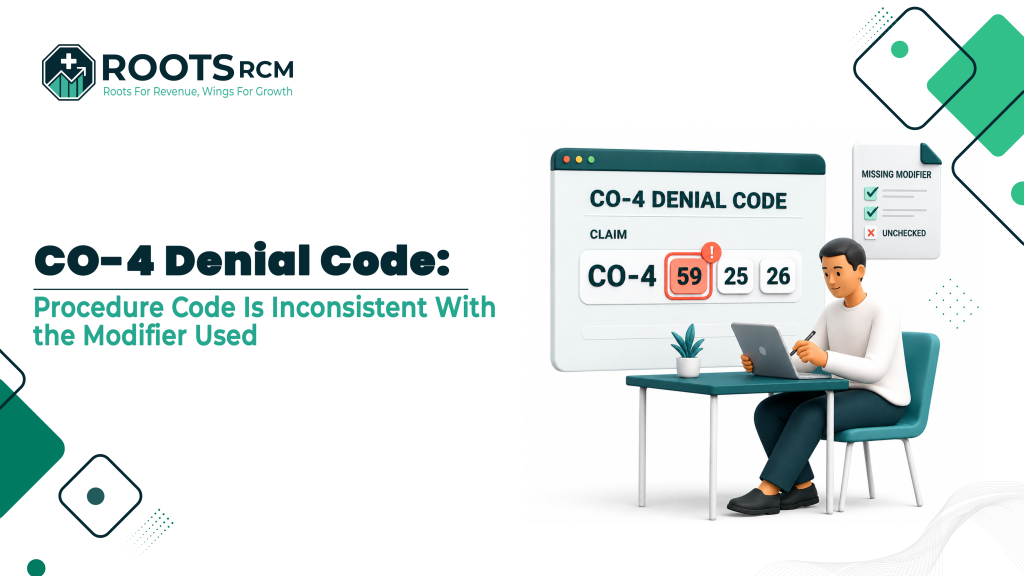
Pro Tip: Modifier 59 is last resort. Use XS, XP, XU, XE when possible.
Extract #30, 3 months later patient gets new insurance, you bill implant #30. Dental claims denied due to missing tooth clause.
On eligibility call, ask: “Is there a missing tooth clause? Effective date of current coverage?” Document it. If clause exists, give patient financial estimate + waiver BEFORE treatment.
Script for front desk: "Your plan may not cover replacement for teeth missing before you joined. Let us check before we start."
Billing secondary before primary pays. Or billing both dental claims with same fee and getting overpayment recoupment.
Pro Tip: If secondary is Medicaid, many states do not pay if primary pays more than zero. Check state rules before submitting secondary dental claims.
Credentialing Killer: CAQH for dental? Many dental payers do not use CAQH. They use their own portal + state license + DEA + malpractice certificate. Track it separately for each payer.
ADA Form Box 35:
Examples:
Leaving Box 35 blank when dental claims need context.
If you have to think “Should I explain this?” Yes, explain it in Box 35.
Math: If your average claim = $150 and you miss timely on 10/month = $18,000/year written off.
Dental timely filing is shorter than medical:
Submitting late because you waited for X-rays from referral office. Or resubmitting same dental claim = duplicate denial.
BONUS: DENTAL CLAIM DENIAL PREVENTION FLOW
Before you send, run this check:
If YES to all 5 = SEND your dental claim. If NO to any = Correct before sending.
(Disclaimer: This checklist is for educational purposes only. CDT® codes are copyright American Dental Association. Always verify with ADA Current Dental Terminology 2026, payer provider manuals, and your compliance officer.)