
CO-7 means the procedure code is inconsistent with the patient’s gender.
In simple terms, the payer’s system believes that the procedure reported on the claim does not match the patient’s gender information.
X12 defines CARC 7 as “The procedure code is inconsistent with the patient’s gender.”
This does not automatically mean that the procedure was incorrect. The problem may be an error in the patient’s demographic information, an incorrect procedure code, or a payer specific claim edit.
One common reason is an incorrect gender value in the patient’s billing record.
For example, the patient’s demographic information may have been entered incorrectly during registration. The claim is then submitted with the wrong gender, and the payer’s system compares that information with the procedure code.
Another possibility is that the procedure code was entered incorrectly.
Some procedures are gender specific or are normally associated with a particular anatomical system. If the wrong procedure code is reported, the payer may identify a conflict between the procedure and the patient’s gender.
CO-7 can also occur when the provider’s records and the payer’s records contain different demographic information.
Suppose a patient receives a procedure that is generally associated with a specific reproductive anatomy.
The provider submits the claim, but the patient’s gender information on the claim does not match the payer’s records.
The payer’s system identifies the procedure and gender as inconsistent and returns a denial.
In this situation, the procedure itself may have been correctly performed. The problem behind the denial could simply be incorrect or outdated demographic information.
That is why the billing team should investigate the claim before changing the procedure code when a CO-7 Denial appears.
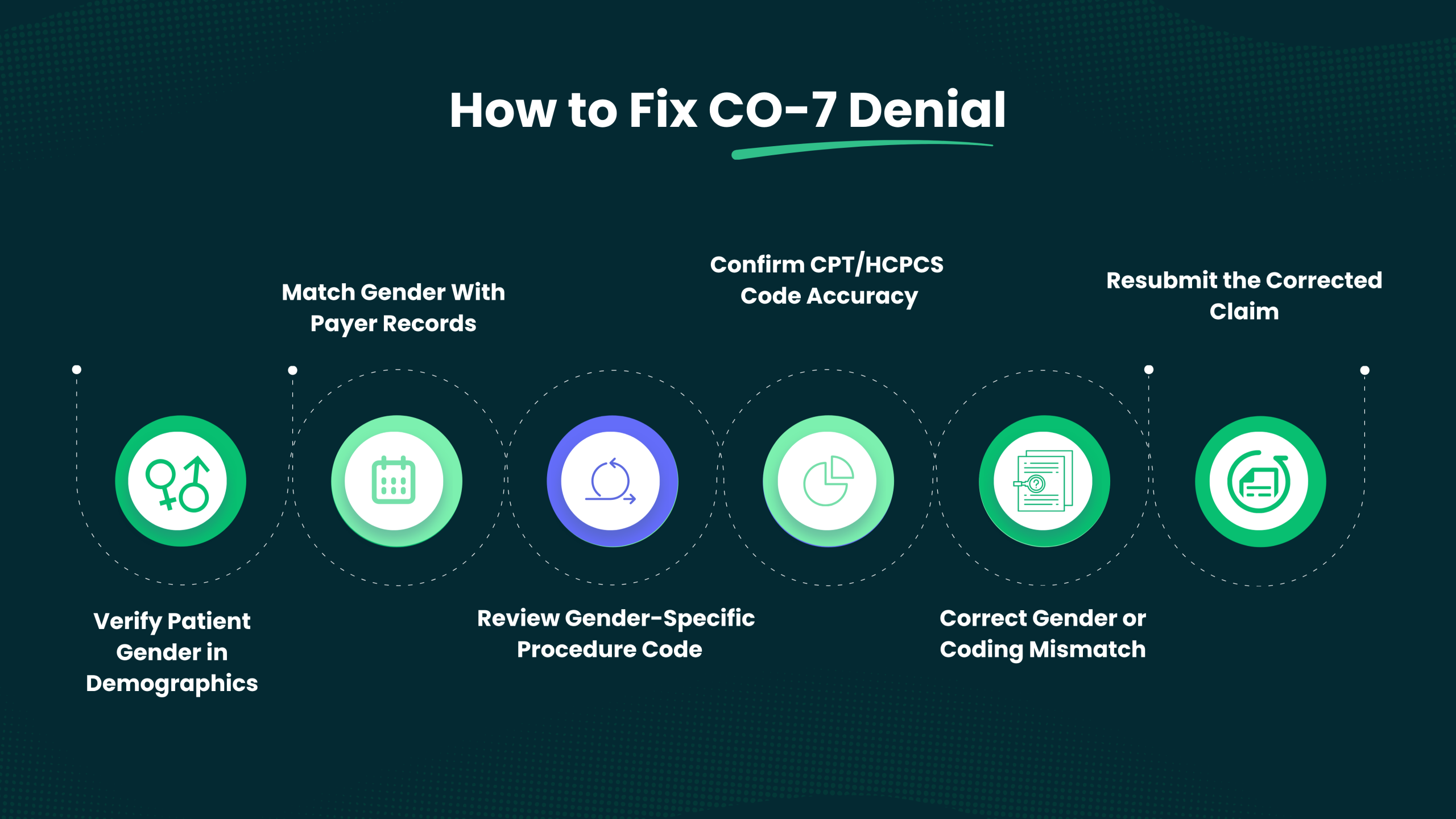
Start by reviewing the patient’s demographic information in the practice management system.
Compare the information with the patient’s insurance records and the information submitted on the original claim.
If the demographic information was entered incorrectly, correct the patient record and follow the payer’s requirements for submitting a corrected claim. This is the most straightforward path to resolving a denial.
If the demographic information is correct, review the procedure code and the medical documentation. Make sure the procedure code accurately describes the service that was performed.
If both the patient information and procedure code are correct, review the payer’s specific policy and any accompanying Remittance Advice Remark Code (RARC) for additional information about the CO-7 Denial.
The important point is to correct the actual source of the mismatch rather than guessing at a fix.
When a CO-7 Denial appears, review:
First, confirm that the demographic information is accurate. Then verify that the procedure code is correct and supported by the documentation. Finally, determine whether the payer has a specific rule that explains the denial adjustment.
This prevents the common mistake of changing a valid procedure code simply because the payer’s system produced an edit on a denial.
Accurate demographic information is important throughout the revenue cycle.
The information collected during registration becomes part of the claim submitted to the payer. If incorrect information enters the system at registration, it can create problems later during claim adjudication.
This is particularly important when a patient’s demographic information has changed or when the provider’s records differ from the payer’s records.
However, demographic information should always be handled according to applicable privacy, payer, and regulatory requirements. The billing team should use the information that is properly documented and required for the claim rather than making assumptions based on the procedure being billed.
Prevention starts at registration.
Patient demographic information should be entered accurately and reviewed when necessary. Insurance information should also be verified so that the provider’s records are consistent with the payer’s records.
The coding team should make sure that the procedure code accurately represents the service documented by the provider.
Claim scrubbing tools may identify some procedure and demographic inconsistencies before submission, giving the billing team an opportunity to investigate the claim before it reaches the payer.
If the patient’s information was entered incorrectly, correct the underlying record and submit a corrected claim according to the payer’s instructions. This is the most common resolution path for a Denial caused by a demographic error.
If the procedure code was incorrect, correct it based on the medical documentation and applicable coding rules.
If the information and coding are correct, investigate the payer’s policy and determine whether an appeal or payer review is appropriate for the CO-7 Denial.
Do not change patient or procedure information simply to obtain payment.
A CO-7 Denial means that the payer believes the procedure code is inconsistent with the patient’s gender information.
The cause of a Denial may be an incorrect demographic entry, an incorrect procedure code, or a difference between the provider’s and payer’s records.
The right approach is simple: verify the patient information, review the procedure code, check the documentation, and then investigate the payer’s requirements.
The goal is not simply to remove the Denial. The goal is to make sure the claim accurately represents the patient and the service that was provided. And if a CO-7 Denial keeps recurring, it is time to look at the registration and coding workflows that are allowing the mismatch to reach the payer in the first place.
Disclaimer: This article is provided for general educational and informational purposes only. The examples and information used are fictional or generalized and do not relate to any real patient or patient's medical, insurance, or billing information. Payer policies, requirements, and denial code usage may vary and can change over time. Always verify current payer guidelines and applicable official requirements before taking action on a claim.

CO-7 Denial means the procedure code is inconsistent with the patient's gender.
A CO-7 Denial can result from incorrect demographic information, incorrect procedure coding, or a mismatch between the provider's and payer's records.
Verify the patient's demographic information, review the procedure code and medical documentation, check the payer's requirements, and correct the actual error before resubmitting or appealing the claim.
No. The procedure code may be correct. Incorrect or inconsistent patient information can also cause a CO-7 Denial.
Yes. Accurate registration, insurance verification, correct coding, and pre-submission claim review can reduce CO-7 Denials significantly.
No. Patient information and coding should accurately reflect the documented information and applicable requirements. Never change either simply to make a CO-7 Denial go away.